
 Skip to content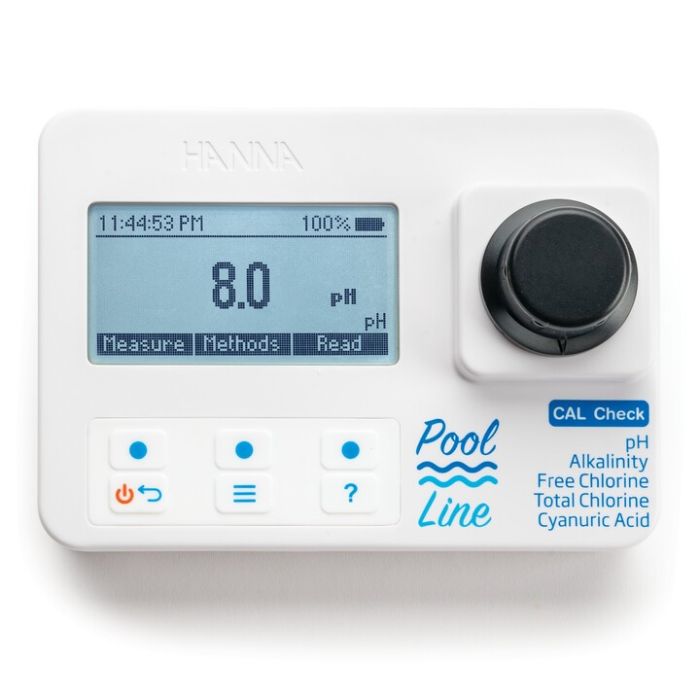
Free and Total Chlorine, pH, Alkalinity, and Cyanuric Acid are some of the most important parameters when maintaining a safe and clean pool.
Chlorine is a common chemical used by many due to is disinfection properties. Free chlorine can exist in two forms and which form is present is based on the pH. At pH less than 7.6 hypochlorous acid (HOCl) is the predominate form found while at pH greater than 7.6 the hypochlorite (OCl-) form becomes predominate. This is very important when it comes to preventing biological growth in water or keeping a swimming pool safe since hypochlorous acid is 100 times more effective as a sanitizer. Total chlorine represents both the free chlorine and combined chlorine present. Combined chlorine is the chlorine bound to nitrogen substances such as ammonia. In swimming pools, combined chlorine that we can smell, is irritating to the eyes. A free chlorine measurement is subtracted from a total chlorine measurement to determine how much combined chlorine is present.
Alkalinity is also a very important parameter in monitoring swimming pool water chemistry. Alkalinity is the buffering capacity of a solution to resist change from an acid or base. Chlorine can also be a base that will increase the pH of the water as it is added to it. Having a sufficient level of alkalinity helps to buffer against the pH so that it takes more over time in order to cause a pH change.
Cyanuric acid is often added to a swimming pool to prevent the loss of chlorine to sunlight. Cyanuric acid is commonly found in dry chlorine such as trichloroisocyanurate (trichlor). This form can be purchased as a solid “puck” and placed in flotation devices to erode slowly into the water. Maintaining the proper level of cyanuric acid will increase the life of chlorine in the pool. Cyanuric acid will build up overtime as more chemical is added. Unfortunately, having too much will decease the Redox (ORP) potential that is effective at killing the bacteria in the pool. For this reason cyanuric acid should be measured for pools that are using it as a stabilizer.
Important Note: Chlorine by DPD chemical measurement is preferred over ORP measurements due to the masking of the oxidation potential from chlorine and other oxidizers when using cyanuric acid (isocyanurate containing sanitizers) as a stabilizer. It will be possible to obtain a 625 -650 mV ORP reading when using cyanuric acid.
HI971044 allows any user to measure these key swimming pool water quality parameters with laboratory grade accuracy. The reagents are pre-made and the meter offers a tutorial mode to guide the user step by step in performing the measurements.
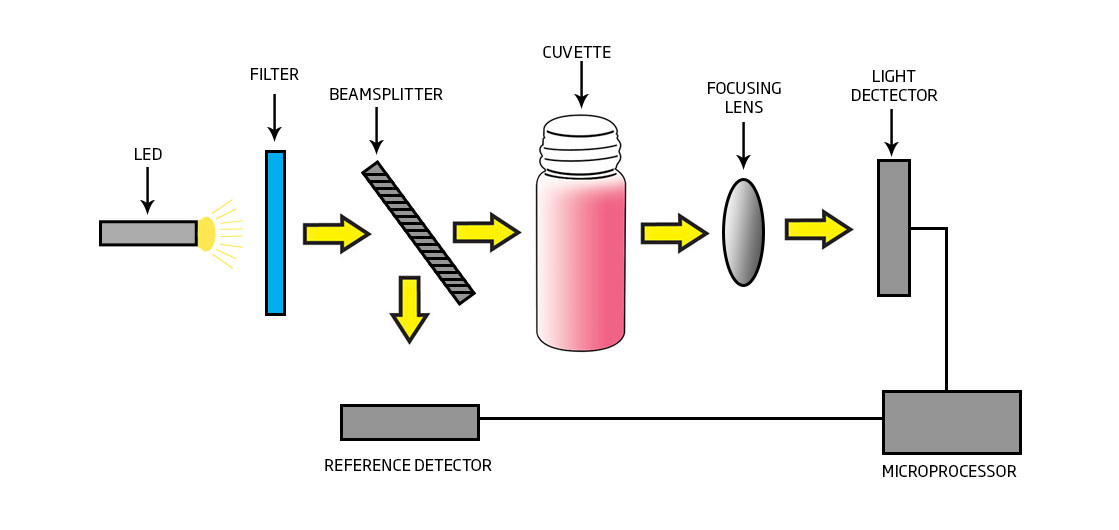
The HI971044 has an innovative optical system that offers superior performance in accuracy, repeatability, and the short amount of time it takes to perform a measurement. This compact, waterproof meter is extremely user friendly with a tutorial mode that walks the user graphically, step by step, in performing a measurement. The use of a backlit dot matrix LED allows the use of virtual keys which makes the operation of the meter very intuitive including selecting different units of measure, reviewing GLP data, recalling the last 50 measurements, and customizing the meter to user preferences.
HI971044 is completely waterproof including the cuvette holder that is designed with ridges to protect the optical path from getting scratched by the cuvette and a gasketed battery compartment that holds three common AA batteries. The compact design fits comfortable in the hand for use in the field or on a table for benchtop use. The LCD is 71 mm (2.75″) by 37 mm (1.6″) and is backlit for easy viewing under all conditions.
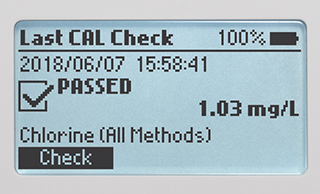
CAL Check
Advanced features including CAL-Check to verify performance, GLP for last calibration date, setup options, and the ability to see all accessories used with the meter.
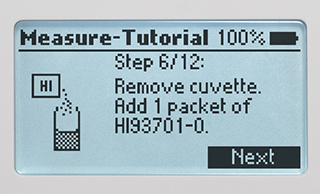
Tutorial Mode
When enabled, the tutorial mode will guide the user step by step through the measurement process .
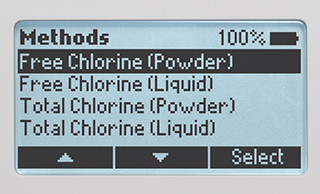
Method Options
Choice of powder or economical liquid reagents for chlorin measurments.
Stable Light Source:
High Efficiency Light Source:
High Quality Filters:
Greater Light Yield:
CAL Check Functionality:
Built-in Reaction Timer:
Large Cuvette Size:
Intuitive Dot Matrix Display:
Auto-off Protection:
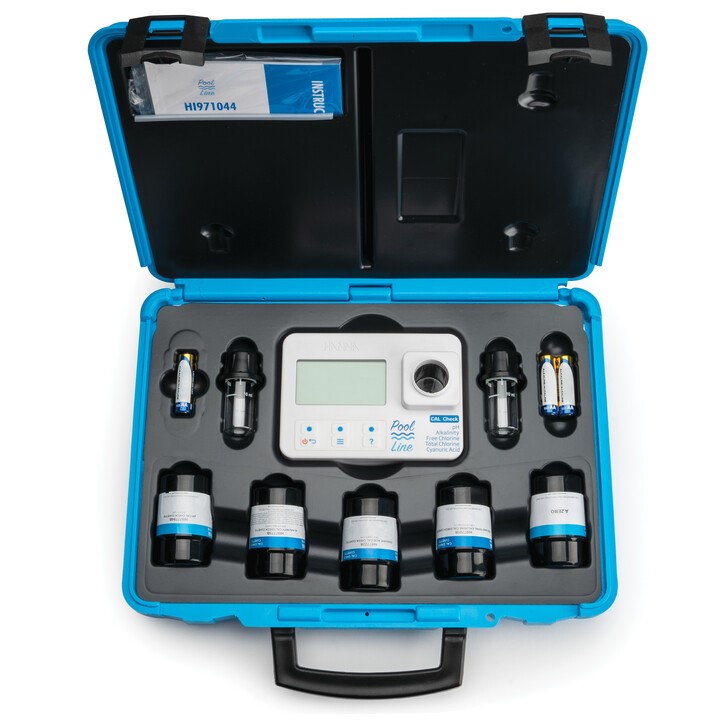
The HI971044 is available as a kit (HI97104C) which includes:
*Reagents ordered separately
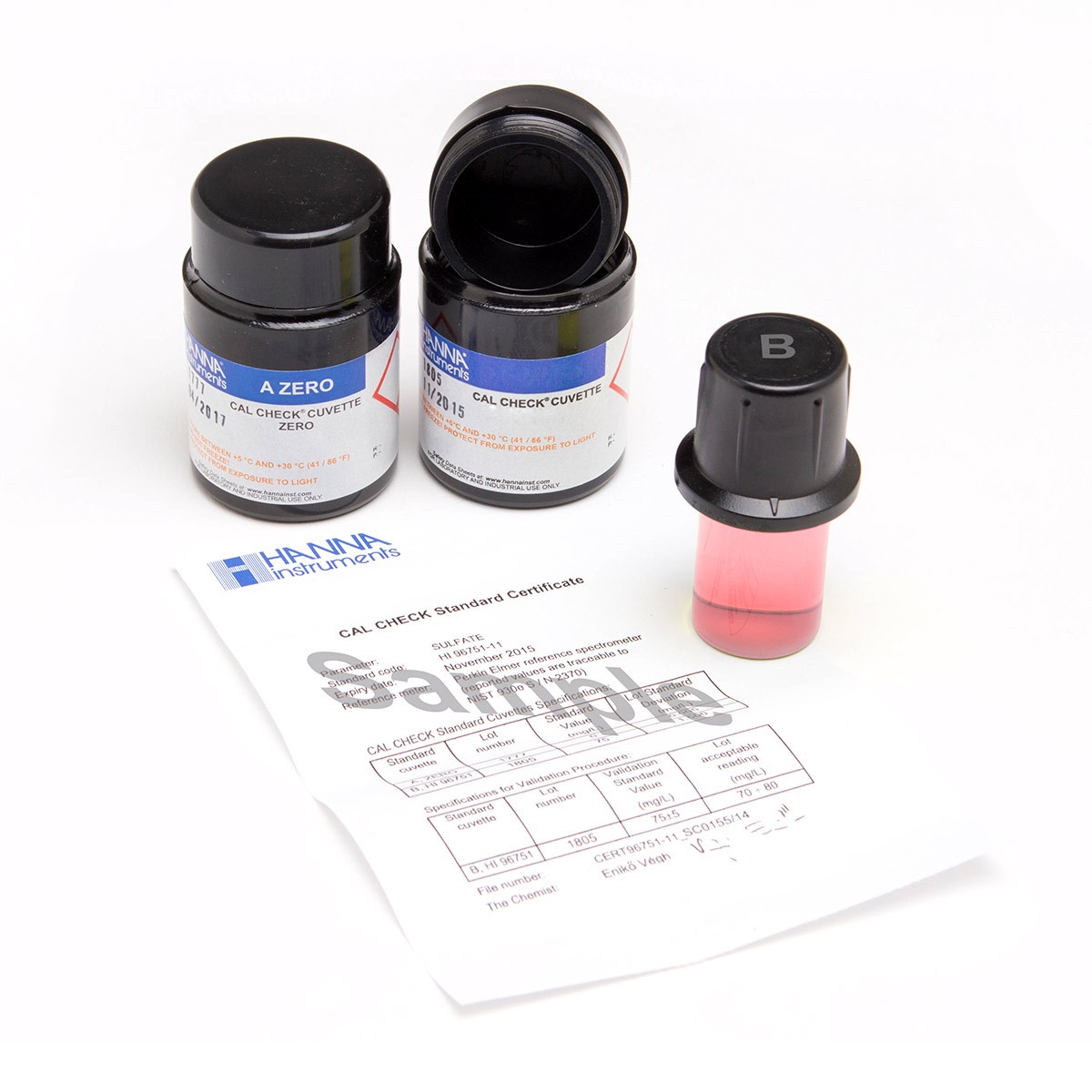
CAL Check™ standards with certificate
The CAL Check™standards are used for calibration and performance verification of photometers with the CAL Check™ function. Individual sets of CAL Check™ standards are available for each parameter on the HI971044:
Supplied with Certificate of Analysis
Provided storage containers
 BannerText_Seraphinite Accelerator