
 Skip to content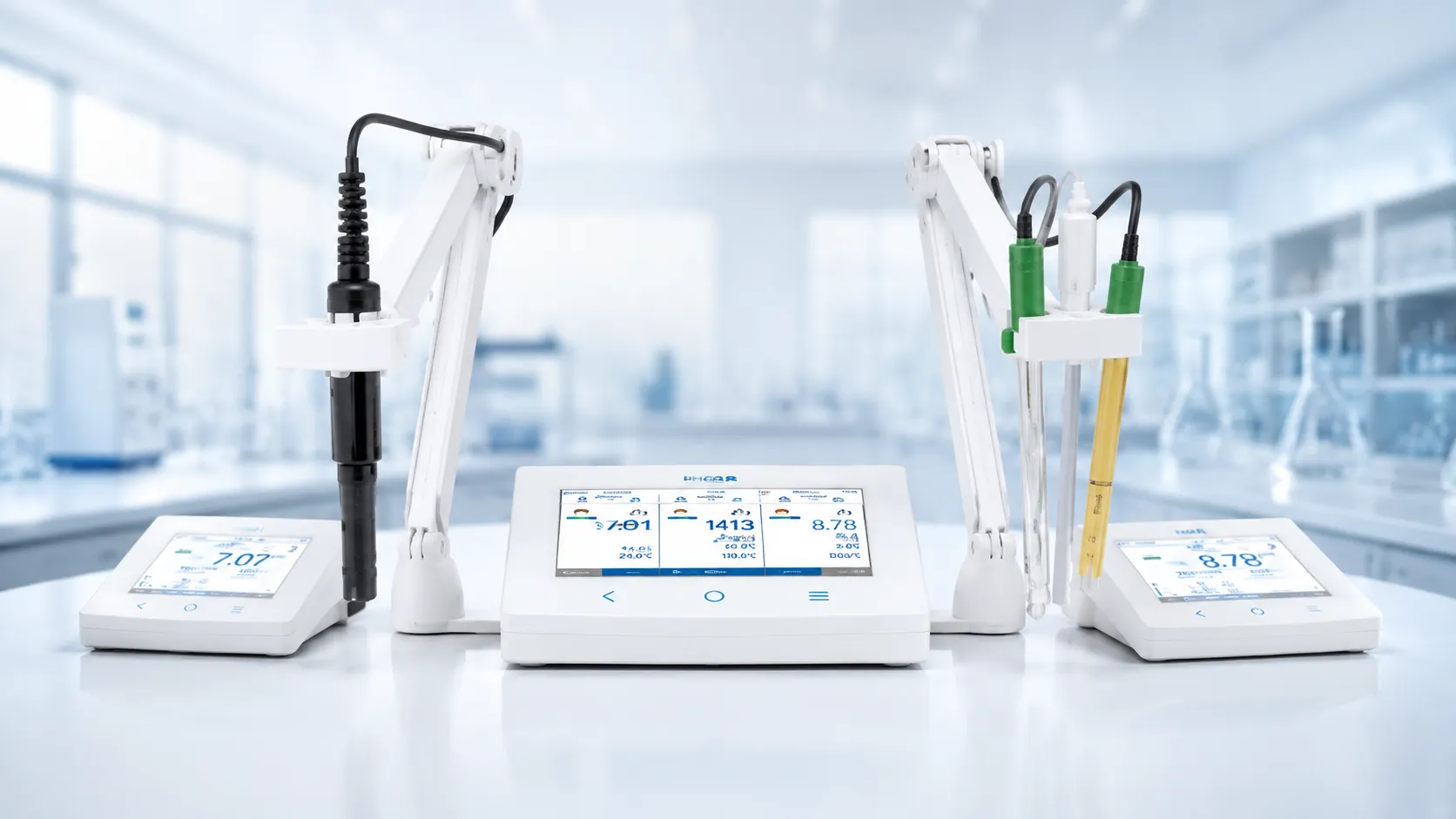
Hanna Advanced Benchtop Meters are precision laboratory instruments made by Hanna Instruments for stationary, bench-based measurement of parameters such as pH, ORP, electrical conductivity (EC), total dissolved solids (TDS), and dissolved oxygen (DO), depending on the model and connected probe. Unlike portable field meters, these instruments are designed to stay on a laboratory bench, offering higher-resolution displays, more extensive calibration and data logging functions, and support for Good Laboratory Practice (GLP) record-keeping. This guide explains what Hanna Advanced Benchtop Meters do, how they work, and what laboratories in Oman and the wider GCC should evaluate before purchasing.
Chemstock supplies Hanna Instruments products, including Hanna Advanced Benchtop Meters, to laboratories, universities, and industrial quality control facilities across Oman and the GCC.
Hanna Advanced Benchtop Meters are stationary laboratory instruments that measure water and solution parameters — most commonly pH, ORP, conductivity, TDS, and dissolved oxygen — using an electrode or probe connected to a benchtop unit with a larger display and more advanced calibration and logging functions than a portable meter. They are built for laboratories that need consistent, high-precision measurement at a fixed location rather than in the field.
The “advanced” designation within Hanna Instruments’ benchtop range generally refers to added functionality compared with basic benchtop models: this can include multi-point calibration with automatic buffer recognition, GLP-compliant data logging, USB or other connectivity for exporting results, and support for multiple parameters or probes from a single unit. Exact features vary by specific model, so laboratories should confirm the functions included in a given configuration with their supplier before ordering.
A Hanna Advanced Benchtop Meter works by connecting a parameter-specific electrode or probe to the meter body, which processes the electrical signal from the probe and converts it into a displayed reading, typically alongside temperature compensation for accuracy. The benchtop format allows for a stable, fixed measurement setup, often paired with a magnetic stirrer for consistent sample mixing during testing.
A typical laboratory measurement workflow follows this general pattern:
Because these meters are used in laboratory settings where documentation matters, the calibration history and data logging features are often as important to buyers as raw measurement accuracy.
Hanna Advanced Benchtop Meters are used for precise, documented measurement of parameters such as pH, conductivity, and dissolved oxygen in laboratory settings where repeatable results and calibration records matter, including quality control, research, and regulatory testing environments. Their fixed bench setup and advanced calibration functions make them suited to laboratories running frequent, standardized testing rather than occasional field checks.
Common laboratory applications include:
| Industry | Application | Typical Requirement |
|---|---|---|
| Pharmaceutical companies | pH and conductivity testing of raw materials and water systems | High accuracy with GLP-compliant record-keeping |
| Quality control laboratories | Routine product and process testing | Repeatable results with documented calibration history |
| Universities & research institutions | Teaching and research applications across multiple parameters | Reliable, well-calibrated instrumentation for varied experiments |
| Food & beverage companies | Process and product water quality testing | Consistent parameter verification supporting product quality |
| Environmental laboratories | Water and effluent sample analysis | Accurate measurement suitable for regulatory reporting |
| Water treatment companies | Bench verification of field or process readings | Precision reference measurement against field instruments |
| Government laboratories | Regulatory and compliance testing | Documented, auditable measurement records |
Benchtop meters generally offer higher measurement stability and more advanced calibration options than portable field meters, since they are not constrained by battery life, ruggedized casing requirements, or field portability trade-offs. For laboratories operating under quality management systems, GLP-compliant data logging reduces the manual record-keeping burden and supports traceability during audits or accreditation reviews.
The trade-off is that benchtop meters are not designed for field use — a laboratory that also needs to test samples on-site will typically need a separate portable meter in addition to a benchtop unit. Benchtop instruments also generally represent a higher upfront investment than basic portable meters, which is worth weighing against how much of the laboratory’s testing volume genuinely requires bench-level precision and documentation.
| Factor | What to Check | Why It Matters |
|---|---|---|
| Parameters needed | Confirm whether you need pH, ORP, conductivity, TDS, dissolved oxygen, or a combination | Determines which meter configuration and electrodes to order |
| Calibration requirements | Check the number of calibration points supported and buffer recognition features | Multi-point calibration improves accuracy across your working range |
| Data logging and GLP compliance | Confirm whether GLP-compliant logging is included or optional | Important for laboratories under formal quality or accreditation requirements |
| Electrode compatibility | Match the electrode type to your sample matrix (clean water, viscous samples, high-conductivity solutions, etc.) | The wrong electrode reduces accuracy and shortens electrode life |
| Connectivity needs | Check available data export options such as USB | Determines how easily results integrate with your laboratory’s record systems |
| Laboratory workflow | Consider sample volume, throughput, and whether a stirrer or additional accessories are needed | Affects overall efficiency of routine testing |
Electrodes and probes used with Hanna Advanced Benchtop Meters should be stored according to the manufacturer’s instructions for that specific electrode type, since pH and ORP electrodes generally require an appropriate storage solution to keep the sensing membrane hydrated between uses, while conductivity and dissolved oxygen probes have their own specific storage and maintenance needs. The meter body should be kept in a stable laboratory environment consistent with its rated operating conditions, away from excessive humidity, dust, or temperature extremes that could affect electronic components. Calibration should be performed using fresh, correctly stored standards, and the frequency should reflect the laboratory’s quality requirements — laboratories operating under formal accreditation typically follow a defined calibration schedule as part of their quality management system. Buyers should consult Hanna Instruments’ official product documentation and relevant laboratory quality standards for the specific calibration frequency and storage conditions applicable to each meter and electrode combination.
Accurate, well-documented benchtop measurement underpins decisions across quality control, research, and regulatory reporting. Inaccurate pH readings can lead to incorrect product formulation or process adjustments, unreliable conductivity data can obscure real changes in water or process quality, and incomplete calibration records can create problems during an audit or accreditation review. Investing in a properly calibrated, well-maintained Hanna Advanced Benchtop Meter — paired with a realistic electrode maintenance and calibration schedule — supports laboratory results that hold up to both internal quality checks and external scrutiny.
Laboratories across Oman, including those supporting pharmaceutical manufacturing, food and beverage production, oil and gas operations, and academic and government research, rely on precise, well-documented measurement for both routine quality control and regulatory compliance. Facilities based in Muscat and other regions of the Sultanate often need equipment that can support formal quality systems, given the presence of pharmaceutical, food processing, and industrial quality control laboratories operating under recognized standards.
For laboratories sourcing Hanna Advanced Benchtop Meters in Oman, important purchasing considerations include confirming that replacement electrodes and calibration standards are available locally for ongoing use, checking whether the specific model supports the GLP documentation your laboratory’s quality system requires, and factoring in delivery timelines for both the instrument and its accessories. Chemstock supplies Hanna Instruments products, including Hanna Advanced Benchtop Meters, to laboratories and industrial customers across Oman and the broader GCC region.
Chemstock distributes Hanna Instruments products, including Hanna Advanced Benchtop Meters, alongside a broader catalog covering Laboratory Equipment in Oman, laboratory chemicals, and consumables needed to support day-to-day testing. For laboratories unsure which benchtop configuration matches their parameter and documentation needs, Chemstock can advise on electrode selection, GLP feature requirements, and accessory needs based on the specific application, and can point buyers toward related items such as Laboratory Glassware and Consumables used alongside benchtop testing.
Chemstock supplies Hanna Advanced Benchtop Meters and compatible electrodes to laboratories, universities, and industrial quality control facilities in Oman and across the GCC. Whether your laboratory needs a single-parameter pH meter or a multiparameter benchtop setup with GLP-compliant logging, Chemstock can help confirm the right specification for your facility, and can also advise on related Water Treatment Chemicals and testing consumables used in the same laboratory workflows.
Need a quotation or technical assistance? Contact Chemstock to discuss your product requirements, specifications, quantities, and delivery location in Oman or the wider GCC region.
What are Hanna Advanced Benchtop Meters used for?
Hanna Advanced Benchtop Meters are used for precise, documented laboratory measurement of parameters such as pH, conductivity, and dissolved oxygen. They are designed for stationary bench use in quality control, research, and regulatory testing environments rather than field sampling.
What is the difference between a Hanna Advanced Benchtop Meter and a portable field meter?
A benchtop meter is designed to remain on a laboratory bench and typically offers more advanced calibration, larger displays, and GLP-compliant data logging, while a portable field meter prioritizes ruggedness and battery-powered mobility for on-site testing, generally with fewer advanced logging features.
Are Hanna Advanced Benchtop Meters GLP compliant?
Many advanced benchtop models support GLP-compliant data logging, recording calibration details and results with timestamps for audit purposes, but exact GLP features vary by model. Laboratories should confirm this capability with their supplier before ordering if formal GLP compliance is required.
What parameters can a Hanna Advanced Benchtop Meter measure?
Depending on the specific model and connected electrode, these meters can measure pH, ORP, electrical conductivity, total dissolved solids, and dissolved oxygen, making them suitable for laboratories that need to cover multiple parameters from one instrument type.
Where can I buy Hanna Advanced Benchtop Meters in Oman?
Chemstock supplies Hanna Instruments products, including Hanna Advanced Benchtop Meters, to laboratories and industrial customers in Oman and across the GCC. Contact Chemstock directly to confirm configuration options and request a quotation.
How often should a benchtop meter electrode be calibrated?
Calibration frequency depends on the laboratory’s quality requirements and testing volume. Laboratories operating under formal accreditation typically follow a defined calibration schedule, while others calibrate before each testing session or on a set routine using fresh calibration standards.
Can Hanna Advanced Benchtop Meters be used in pharmaceutical laboratories?
Yes. Pharmaceutical companies commonly use advanced benchtop meters for pH and conductivity testing of raw materials and water systems, particularly where GLP-compliant record-keeping supports internal quality assurance and regulatory documentation.
What electrode do I need for a Hanna Advanced Benchtop Meter?
The correct electrode depends on the parameter being tested and the sample matrix — a pH or ORP electrode for acidity and redox measurement, or a separate conductivity or dissolved oxygen probe for those respective parameters. Confirm electrode compatibility with your specific meter model before ordering.
Do Hanna Advanced Benchtop Meters require a stirrer or additional accessories?
Many laboratory workflows benefit from a magnetic stirrer to ensure consistent sample mixing during measurement, particularly for conductivity and dissolved oxygen testing. Whether this is necessary depends on your specific test method and sample type.
What is the difference between Hanna Advanced Benchtop Meters and the Hanna Edge Meter?
Hanna Advanced Benchtop Meters are designed to remain on a laboratory bench with advanced calibration and GLP data logging, while the Hanna Edge Meter is a portable, blade-style multiparameter meter suited to both bench and field use with optional wireless probe connectivity. Laboratories needing maximum documentation and calibration depth often choose a benchtop model, while those needing portability may prefer the Edge Meter.
From water testing to laboratory analysis, Hanna Instruments provides accurate, reliable, and easy-to-use instruments for a wide range of applications. Get expert guidance to find the right Hanna solution for your needs.
Have questions about Hanna Advanced Benchtop Meters products or need help selecting the right instrument for your application? Fill out the form below, and our team will get back to you with the best solution for your business or laboratory.
Have questions about our products or need help selecting the right laboratory equipment or chemicals? Fill out the form below, and our team will get back to you with the best solution for your business or laboratory.
 BannerText_Seraphinite Accelerator